


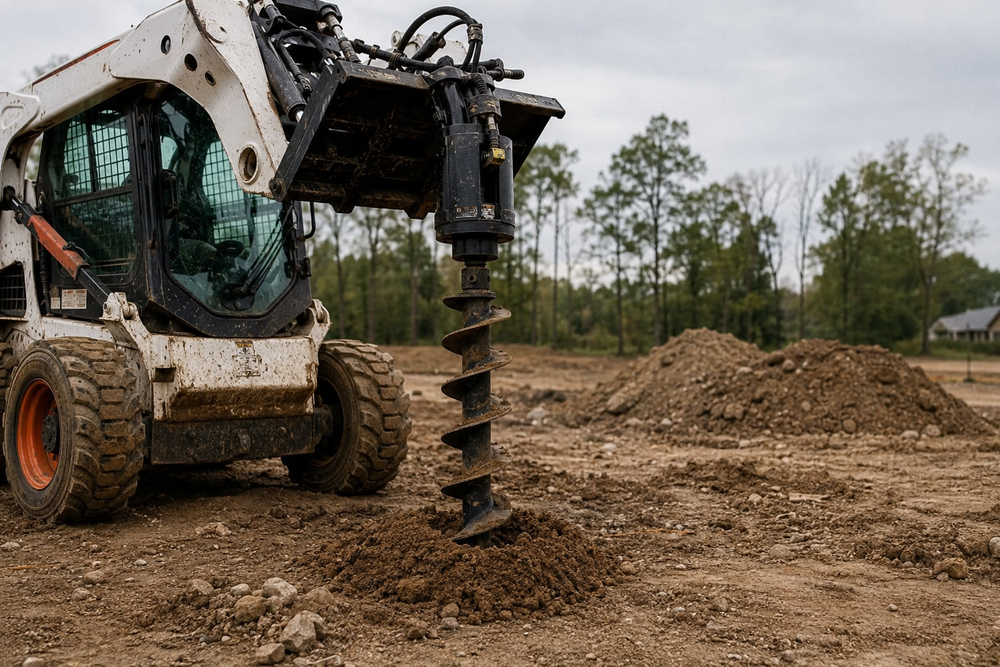
Posted by Spartan Equipment on 13th May 2026
Digging post holes sounds simple until the auger starts fighting back.
One minute, your machine is drilling clean holes. Next minute, the bit won’t spin right, the drive unit overheats, or the auger keeps bouncing around hard ground like it’s trying to escape the jobsite. It happens more than contractors like to admit. Especially when working with clay, compacted dirt, rocky surfaces, or uneven terrain.
A skid steer auger is one of the most useful attachments on a jobsite, no question. But it’s also one of the attachments people push too hard without paying attention to maintenance, soil conditions, or setup. Then they wonder why the gearbox failed halfway through a fence project.
This guide breaks down the most common skid steer auger attachment problems contractors run into and what actually fixes them.
Why Skid Steer Augers Run Into Problems So Often
A lot of operators assume an auger attachment can handle anything if the machine has enough horsepower. Not exactly.
Different ground conditions demand different auger bits, drive systems, and digging speeds. A skid steer auger for hard soil and clay works differently than one used in soft farm dirt. The same goes for rocky terrain or frozen ground.
Then there’s operator error. Honestly, plenty of auger failures come from rushing.
Common causes include:
- Using the wrong auger bit for the soil
- Running the auger too fast
- Poor hydraulic flow
- Bent teeth or worn cutting edges
- Ignoring gearbox maintenance
- Forcing the attachment into hard ground
Once one part starts wearing unevenly, the whole auger drive unit starts struggling.
Problem #1: The Auger Won’t Penetrate Hard Ground
This one frustrates almost everybody at some point.
You lower the skid steer auger attachment, engage the hydraulics, and instead of drilling, it just spins on the surface. Maybe it bounces. Maybe it barely scratches the dirt.
Usually, hard clay or compacted soil is the issue.
A standard auger attachment for hard soil and clay needs aggressive teeth and the right pilot bit. If the cutting edges are dull, penetration becomes painfully slow.
Here’s what actually helps:
Check the Auger Teeth First
Worn teeth are the biggest reason augers stop cutting properly.
Replace damaged or rounded teeth before the job gets worse. Contractors sometimes try squeezing “one more project” out of old teeth. Bad idea. It overloads the hydraulic system and stresses the drive motor.
Slow Down the Hydraulic Speed
More speed does not equal more digging power.
In hard ground, slower rotation with higher torque usually works better. High RPM often causes the bit to skate across the surface instead of biting into it.
Use a Rock Bit or Heavy-Duty Auger
Some soil needs specialized tooling. Especially in rocky areas or dense clay.
The best skid steer auger for fence posts in difficult conditions usually includes:
- Carbide teeth
- Reinforced flighting
- High-torque drive unit
- Rock pilot head
Trying to use a light-duty bit in hard ground just wastes time.
Problem #2: Excessive Vibration During Digging
If the entire machine starts shaking while drilling, something’s wrong.
Some vibration is normal. Violent shaking isn’t.
This problem usually points to one of three things:
Bent Auger Shaft
Hitting buried rock or forcing the attachment sideways can bend the shaft slightly. Even minor bends create an imbalance during rotation.
Once that happens, the auger bit wobbles constantly.
Uneven Wear on the Flighting
When one side wears more than the other, the auger loses balance.
Inspect the flights regularly. If sections look thinner or warped, replacement may be necessary.
Wrong Auger Size for the Machine
This gets overlooked all the time.
Following a proper skid steer auger size guide for contractors helps avoid stability issues. Oversized bits place extra strain on smaller skid steers and increase vibration.
Bigger isn’t always better.
Problem #3: Hydraulic Overheating
Hydraulic heat can destroy an auger drive unit more quickly than most people realize.
If the attachment feels excessively hot or performance drops after extended digging, overheating is probably happening.
Causes include:
- Continuous operation without breaks
- Dirty hydraulic fluid
- Restricted hoses
- Incorrect flow rate
- Overloading the auger
A skid steer auger attachment should match the hydraulic capabilities of the machine. Running high-flow attachments on low-flow systems creates problems pretty quickly.
How to Prevent Hydraulic Damage
A few habits make a huge difference:
- Inspect hoses before every project
- Change hydraulic fluid regularly
- Avoid forcing the auger downward
- Let the attachment cool during long drilling sessions
Simple stuff. But ignored constantly.
Problem #4: Auger Gets Stuck in the Ground
This one’s rough because it can stop a project immediately.
Usually happens in wet clay, rocky terrain, or when operators drill too aggressively without clearing spoil material.
Once an auger gets buried deep enough, pulling it out becomes a headache.
Best Ways to Avoid It
Don’t Drill Too Fast: Slow and steady works better. Especially in dense clay.
Lift the Auger Periodically: Bring the bit up every few seconds to clear dirt buildup. Contractors who skip this step often trap the bit underground.
Use Reverse Rotation Carefully: Most excavator auger attachment systems allow reverse spinning. That helps loosen packed material around the flights.
But don’t overdo it. Constant reversing can wear internal gears faster.
Choosing the Right Auger Attachment Matters More Than People Think
A lot of problems start before the machine even hits the dirt.
Using the wrong attachment setup creates unnecessary wear and slower production.
For example:
- Fence contractors usually need narrower bits
- Tree planting often needs wider holes
- Rocky terrain demands reinforced teeth
- Clay requires a higher torque
That’s why experienced operators match attachments carefully instead of buying the cheapest option online.
A quality post hole auger for excavator applications also differs from standard skid steer models. Excavators typically need different mounting systems and torque ranges.
Not every auger fits every machine properly.
Don’t Cheap Out on Auger Attachments
Honestly, cheap augers usually become expensive later.
Broken teeth, leaking motors, gearbox issues, bent shafts… it adds up fast when the attachment can’t handle daily work.
Spartan Equipment offers contractor-grade auger systems designed for difficult ground conditions, fence installation, landscaping, agriculture, and commercial digging.
If your current auger keeps struggling in clay or hard ground, it may not be the machine. It may just be the wrong attachment.
Problem #5: Premature Wear on the Auger Drive Unit
The auger drive unit takes serious abuse during heavy digging jobs.
Ignoring maintenance shortens its lifespan dramatically.
Common warning signs include:
- Oil leaks
- Grinding noises
- Reduced torque
- Jerky spinning motion
- Excessive heat buildup
A failing drive system usually gets worse gradually, not instantly.
Keep the Drive Unit Alive Longer
A few maintenance habits help a lot:
- Grease fittings regularly
- Inspect seals often
- Keep dirt away from hydraulic couplers
- Replace damaged hoses immediately
- Avoid side-loading the attachment
And honestly, store the attachment properly, too. Leaving it exposed to mud and rain nonstop doesn’t help.
How Contractors Can Reduce Downtime on Auger Jobs
Experienced crews usually follow the same routine before drilling begins. Not because it’s exciting. Because it prevents problems later. A quick pre-job inspection saves hours of downtime.
Basic Checks Before Digging
- Inspect teeth and pilot bit
- Verify hydraulic connections
- Check fluid levels
- Match bit size to soil conditions
- Confirm proper torque settings
Five or ten minutes upfront can prevent expensive repairs later in the day.
Especially on large commercial projects.
Final Thoughts
Most skid steer auger problems are preventable. That’s the truth.
The attachment usually gives warning signs before complete failure happens. Operators just miss them or ignore them because the project needs to be finished fast.
Using the correct skid steer auger attachment, maintaining the auger drive unit, and choosing proper bits for soil conditions makes a huge difference. Especially in hard clay or rocky terrain, where standard augers struggle.
And when digging becomes part of daily operations, investing in contractor-grade equipment matters. Cheap attachments rarely survive demanding jobs for long.
If you need reliable equipment for tough digging conditions, fence installation, landscaping, or commercial drilling, check out the heavy-duty attachment lineup from Spartan Equipment.
Visit Spartan Equipment to find the right auger attachment for your machine.
FAQs
What size auger attachment do I need for my excavator?
The right size depends on the type of work you’re doing and the machine capacity. A skid steer auger or excavator auger attachment used for fence posts usually needs smaller bits, while tree planting or foundation work often requires larger diameters. Always match the auger size with hydraulic flow and soil conditions. Using oversized bits on smaller machines can reduce performance and create unnecessary strain.
Which auger bit is best for rocky soil?
Rocky soil usually requires heavy-duty auger bits with carbide teeth and reinforced flighting. Standard dirt bits wear out quickly once they hit rock repeatedly. Contractors working in difficult terrain often prefer a specialized auger attachment for hard soil and clay because they cut more aggressively and survive longer under pressure. Cheap bits rarely last in rocky conditions.
Is an excavator auger suitable for tree planting?
The excavator auger attachment functions as an effective tree planting tool because it creates uniform holes which it digs more quickly than workers can do through manual excavation. The system provides great assistance to landscaping teams who work on extensive planting assignments. The correct auger width must be selected according to these two factors: root ball dimensions and soil conditions. The soft soil allows faster drilling compared to the compacted clay, which requires more effort to drill.
What steps should I take to keep my auger drill attachment functional?
People underestimate the importance of routine maintenance work. After each project, cleanup requires checking the teeth for wear, inspecting hydraulic hoses, greasing all operational components and removing accumulated dirt. The performance of an auger drill attachment decreases when users fail to maintain it because the device starts to overheat. Operators should also inspect the auger drive unit regularly because small leaks or loose fittings often turn into expensive repairs later.
What is the price range for an excavator post hole auger?
Attachment size, torque rating, and build quality determine the pricing variations. The price for small post hole digging attachment systems starts at two thousand dollars, but heavy-duty commercial excavator augers require a much higher investment. The price of attachments designed for hard ground, clay, and rocky surfaces increases because they use stronger drive systems and advanced teeth technology that enhances their durability.