


Posted by Spartan Equipment on 16th Jun 2026
Land clearing is a total beast of a job. You are slamming machines all day against stubborn roots, heavy rocks, and thick, nasty brush. It is a rough environment where stuff breaks fast if you aren’t paying attention.
The biggest weak spot? Your machine's veins and arteries: the hydraulic setup. A single blown line stops the whole job cold and drains your wallet. Regular hydraulic system maintenance is the only way to survive this abuse without going broke.
If you want to keep your gear running strong and avoid those huge repair bills, you kind of have to know what actually ruins these systems. Let's look at what causes hydraulic damage in land clearing equipment so you can protect your livelihood.
What Causes Hydraulic Damage in Land Clearing Equipment?
Out in the woods, trouble comes from every single angle. It isn’t just old age that kills your parts. The dirt and trees are actively trying to wreck your machine.
- Flying Debris: Tree limbs and sharp rocks constantly smack into exposed hoses.
- Insane Heat: Pushing heavy loads makes the oil cook fast.
- Grit and Dust: Wood dust gets everywhere and destroys expensive pumps.
- Overworking Gear: Forcing a small machine to handle giant oaks.
If you don't watch out for these everyday hazards, your equipment is going to suffer.
Protect Your Hoses and Fittings
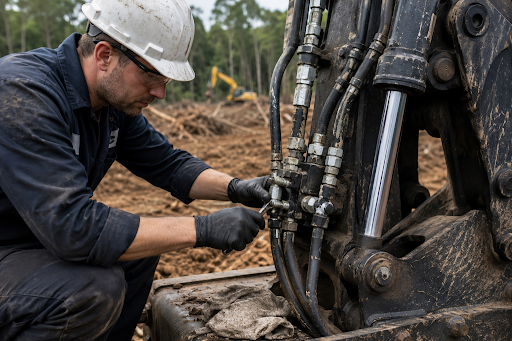
Hoses are always the first thing to go. When you are running site preparation equipment, branches like to reach under the frame, snag your lines, and rip them clean off.
You have to wrap those vulnerable hoses in tough protective sleeves. Nylon wraps or heavy spring guards work absolute miracles out here. Also, rethink your hose routing. Keep those lines tucked tight against the machine frame so they don't hang out like bait.
Keep Things Cool and Clean
Heat is a silent killer that causes major hydraulic performance issues. When your oil gets way too hot, it thins out like water and stops lubricating the internal components.
You need to clean your coolers every single day. Dust, pollen, and wood fibers clog up those tiny cooling fins instantly during landscaping excavation. Blow them out with an air compressor every morning before you crank the engine. It takes five minutes but saves your pump.
The Danger of Contaminated Fluid
Dirt is public enemy number one on a job site. A tiny speck of grit can score a valve spool or chew up a piston seal in no time.
Never crack open a line out in a dusty, windy field if you can help it. Wipe down every single fitting before you click them together. And please, store your spare oil jugs in a clean place with the caps screwed on tight.
Match the Right Attachment to the Job
Using the wrong tool forces your whole system to work way too hard. That constant pressure spike causes massive internal wear.
- Grab a proper skid steer backhoe attachment for the deep digging jobs.
- Match your skid steer blade attachment to the actual weight of the dirt.
- Stop using light-duty brush cutters for heavy-duty land clearing.
Matching your tools to the job keeps the system pressure steady and healthy.
Spotting Early Signs of Trouble
Don't sit around waiting for a massive puddle of oil to tell you something broke. Pay attention to how the machine feels while you work.
Listen for a weird, high-pitched whining noise coming from the pump. Watch for lazy or jerky movements in your hydraulic digging equipment. If the joysticks feel mushy, pull over right then and check things out. Catching a tiny leak early saves you thousands down the road.
Essential Hydraulic Equipment Maintenance Checklist
A simple daily routine stops big breakdowns before they can even start. It keeps your crew moving and the paychecks coming in.
- Pull the dipstick and check fluid levels every morning on flat ground.
- Run your hand along hoses looking for damp spots that mean pinhole leaks.
- Pop the caps off quick couplers and wipe the grit away.
- Grease the cylinder pivot points to take the strain off the metal.
Staying consistent with this stuff changes everything. It turns an unreliable headache into a solid workhorse.
Smart Operating Habits in the Field
How you drive matters just as much as how you wrench. Jerking the controls around completely ruins perfectly good internal parts.
Stop holding the control levers down when a cylinder is already fully extended. That bad habit creates huge pressure spikes and cooks the oil instantly. Smooth, steady movements on the sticks keep your internal seals from bursting apart under the pressure.
Managing Tough Terrain Safely
When you are preparing construction sites, the ground is a total mystery. Hidden stumps and buried boulders are waiting to ruin your day.
Slow down when you are clearing thick undergrowth. If you hit a buried rock hard with a front blade, that shockwave travels straight up the metal into your cylinders. Let the high-flow tool do the cutting work; don't just ram your way through obstacles.
The True Cost of Neglect
Skipping your maintenance feels like a shortcut that saves time today, but it always catches up to you tomorrow.
A trashed pump means your machine sits idle, you miss your deadlines, and clients get pissed off. Plus, you end up wasting good money on emergency mobile mechanics who charge an arm and a leg. Proper hydraulic component protection keeps your business in the black.
Trust Quality Gear to Do the Heavy Lifting
Look, at the end of the day, your daily maintenance is only as good as the steel you are running. Cheap, flimsy attachments flex under pressure, leak at the fittings, and put weird, uneven stresses on your machine’s hydraulic lines.
That is exactly why we build our attachments mean and tough right here at Spartan Equipment. We know firsthand how brutal land clearing is on your machinery. Our American-made attachments are engineered to handle the highest flows and roughest pressures without breaking a sweat, helping you cut out downtime and kick ass on every single job site.
Conclusion
Preventing hydraulic damage isn't some crazy rocket science. It just takes real, consistent effort, clean habits, and using the right attachment for the job. Keep your oil clean, shield your lines from stray branches, and listen to what your machine is telling you. Your bank account will thank you.
Frequently Asked Questions
Why does hydraulic equipment overheat during operation?
Hydraulic equipment overheats during operation, usually because of clogged cooling fins, low fluid, or internal oil bypassing inside a worn-out pump. When you are working in thick dust, debris clogs the radiator fast. This traps heat inside. To keep your machine running cool, check out the heavy-duty attachments at Spartan Equipment. Blowing out the coolers daily with air is your best defence against heat buildup.
What causes hydraulic damage in land clearing equipment?
It usually comes down to physical impacts, dirty oil, and extreme heat. Flying tree limbs puncture exposed lines easily, while fine wood dust crawls past old seals into the fluid. This grit acts like liquid sandpaper inside your pumps and valves, quickly wearing down tight tolerances and causing total component failure.
How do hydraulic leaks affect attachment performance?
Leaks cause a major drop in system pressure and fluid flow, which basically starves your attachments of power. You will notice your tools moving slowly, losing their clamping force, or failing to cut through heavy brush. Tiny leaks also suck dirt inside the lines when the machine cools down at night.
When should hydraulic fluid be replaced?
You should swap it every 1,000 operating hours, or at least once a year. But if, when you pull the dipstick during your routine hydraulic maintenance, you see the oil looks cloudy, kind of milky, or smells totally burnt, then dump it, flush the lines, and add new fluid right away.
What’s the best way to protect quick couplers from getting damaged?
Just put the rubber dust caps back on the couplers the second you disconnect the attachment. Before you reconnect the hoses to the machine, grab a clean rag and wipe the fittings down all the way. If you don’t, you end up essentially pushing grit right into your main oil lines.